
Energy advisory for power, data centers, and the grid.
Nina Khan · Certified Energy Manager · 18+ Years Public & Private Sector Energy
For utilities, data centers, defense installations, energy developers, and commercial facilities. Eighteen years in public and private sector energy, from commercial real estate energy management at Southern Management and utility regulatory work to Army installation energy and energy resilience, the Defense Innovation Unit energy portfolio, and Pentagon operational energy.
30 minutes. No cost. No obligation.
Utilities & Grid
Planning, reliability, and reporting teams under pressure to do more with less.
Data Centers
Power availability, siting, and community risk, answered faster.
Defense Energy
Operational and installation energy resilience for DoD and federal teams.
Energy Developers
Renewables, storage, microgrid, and nuclear teams buried in studies and paperwork.
Commercial Real Estate & Facilities
Energy costs and energy budgets across every building, tracked in both usage and dollars.
Power & Grid Strategy
Generation, grid capacity, and interconnection, planned around what the grid can actually deliver.
Data Center Power, Siting & Water
Power availability, cooling water, and community approval, weighed before the site is chosen.
Microgrids & Energy Resilience
Onsite generation, storage, and microgrids for installations, campuses, and critical facilities.
Natural Gas & Fuel Strategy
Supply contracts, interruptible service, and the role of gas in firm generation.
Utility Rates, Tariffs & Regulation
Rate cases, tariffs, permitting, and commission proceedings that set what you pay.
Energy Data, Budgets & Bill Audits
Energy budgets, cost tracking, and bill audits that find and recover overcharges.
Assess
Find where time, money, and decisions are getting stuck.
Plan
A clear roadmap ranked by value.
Deliver
Put it in place, train the team, measure the results.
Where AI helps
Nina uses AI for the routine parts of energy work, like cleaning meter and utility data, drafting reports, and finding answers in long studies and filings. She decides where it fits, sets the rules for data and review, and checks its work. Teams finish faster, spend less, and keep their time for the decisions that need them. Human decides. AI works.
AI training and governance for energy teams →Common Questions
How can a data center secure power faster?
Start with what the local grid can deliver and when. Interconnection queues, transmission upgrades, and community approval now set the timeline more than equipment does. Flexible load agreements, onsite generation, and early work with the utility and the community can shorten the path.
What does a Certified Energy Manager do for a facility?
Tracks energy use and cost across buildings, finds waste, audits utility bills, negotiates supply contracts, and plans projects that cut cost and improve reliability.
When does a microgrid make sense?
When an outage costs more than the system, as at defense installations, hospitals, data centers, and critical facilities, or where rates and demand charges let onsite generation and storage pay back.
How does utility regulation affect energy costs?
Rates, tariffs, and commission decisions set much of what large customers pay. Taking part in rate cases and tariff revisions, and choosing the right rate schedule, can move costs as much as efficiency projects.
Where does AI help in energy work?
In the routine work: cleaning meter and utility data, drafting reports, and finding answers in long studies and filings. People make the decisions, with clear rules for data and review.
Certified Energy Manager (CEM) · M.A. Applied Economics, Johns Hopkins · Business Economics, University of Texas at El Paso, Summa Cum Laude · Harvard Agentic AI Executive Intensive · Google Generative AI Leadership
Department of Defense (OUSD A&S) · Operational Energy Innovation Directorate · Army Office of Energy Initiatives · Defense Innovation Unit · Booz Allen Hamilton · Huntington Ingalls Industries · Southern Management
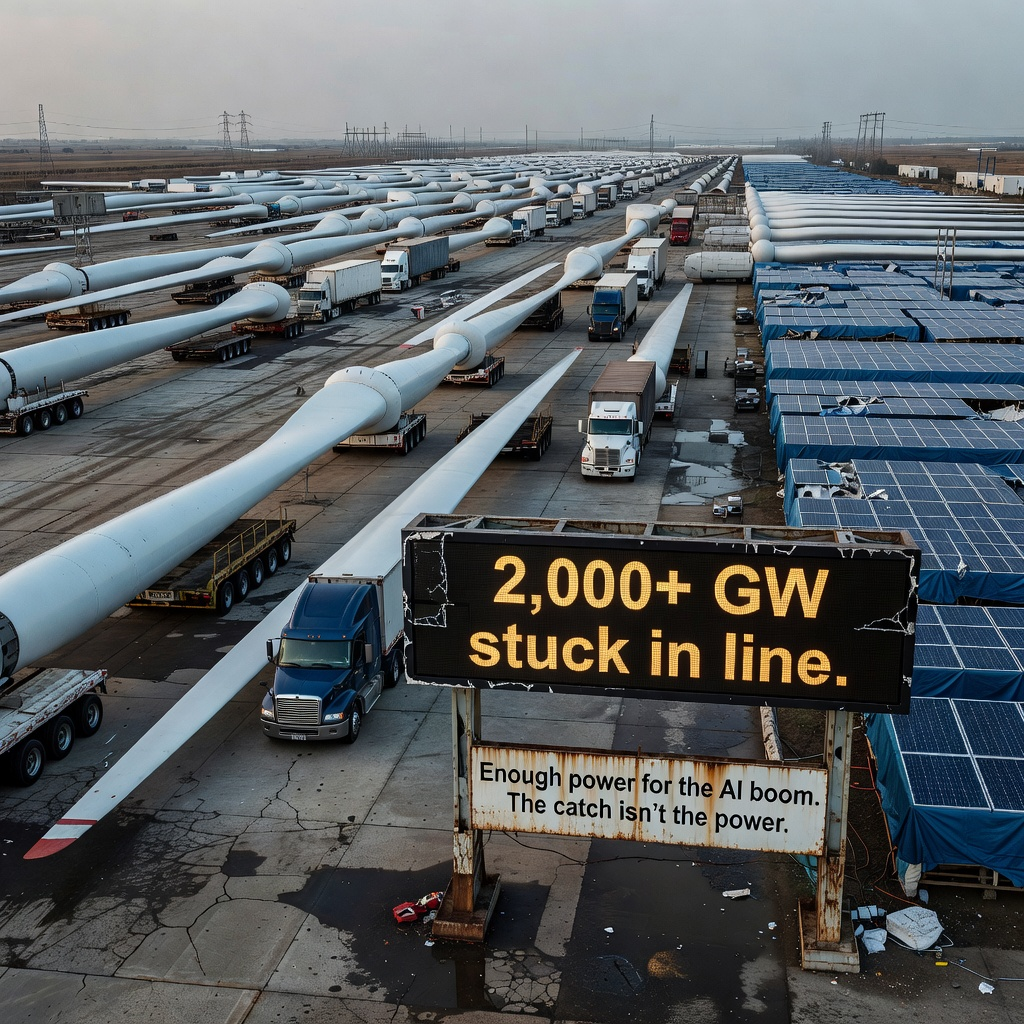
The Grid Can't Connect Power Fast Enough for AI
Everyone is racing to find more power for AI. The harder problem, and the one almost nobody is pricing in, is how long it takes to connect that power to the grid. Here is why the queue to get connected, not the ability to generate, is the real limit on how fast AI can grow.
Running a small business?
The same approach, sized for smaller teams.